Charlotte
Kliem
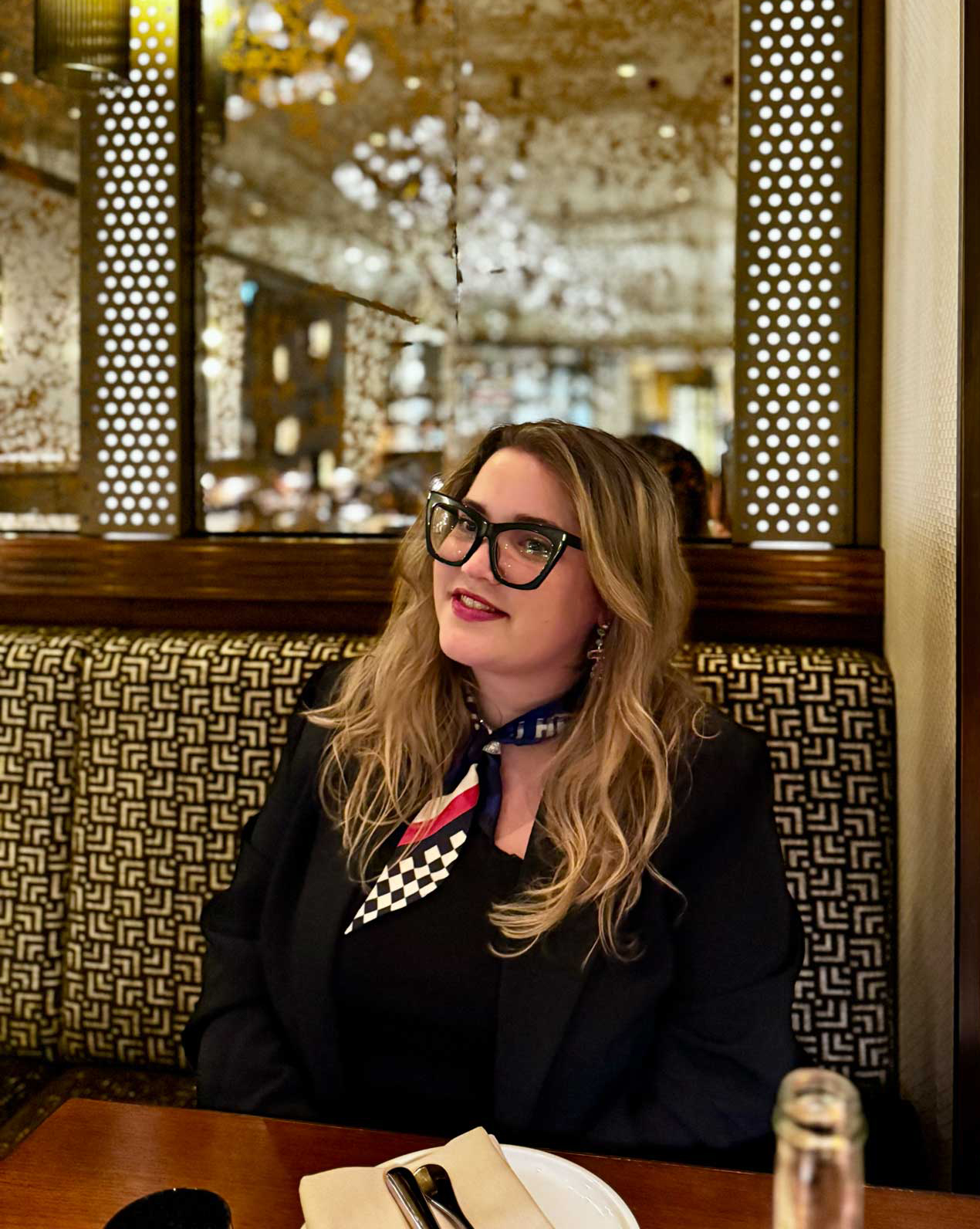
I'm Charlotte — a communication designer and brand strategist based in Dresden, originally from Magdeburg. I hold a Bachelor's degree in Design: Product and Communication from HTW Dresden, and I work at the intersection where a brand decides what it actually is, and then very carefully how to say it.
Brand strategy, editorial design, campaign work, web — for me, that's not four separate disciplines, it's the same job in different states of matter. A positioning without design is a PowerPoint nobody reads. Design without positioning is pretty — and usually interchangeable. I'd rather do the third thing: both, properly argued, cleanly built, with the kind of detail you only notice when it's missing.
My work spans creative strategy, brand identity, editorial design, campaign development, and web. The thread running through all of it is the same one: I want the work to do something. Not just sit on a shelf, not just photograph well, not just win an internal nod of approval. I want it to move a brand from one place to a clearer one — and to do that with enough craft that the move is also worth looking at.
I'm two things at once, and I've made peace with it. The analytical half of me loves competitive analyses, brand mechanics, positioning workshops, OKR frameworks, and the quiet satisfaction of finding the one sentence a whole strategy can hang from. I read brand books for fun. I will happily spend an afternoon comparing how three companies in the same category talk about the same thing, just to map where the actual differentiation lives versus where everyone is saying the same generic line in slightly different fonts.
The other half of me sits in InDesign arguing with itself about type sizes, holds significantly more opinions on print finishing than is socially required, and has a soft spot for the particular feeling of a freshly cut signature. I love the moment in a project when strategy stops being a slide and starts being a shape — a layout, a colour, a piece of motion, a sentence that finally sounds the way the brand actually thinks.
These two halves get along. They just don't always agree on the order of operations, and most of my best work has been an honest negotiation between them.
What connects everything I do is a position I'd like to talk my way into more briefings: there is a difference between what a brand says and what it means. Most of the interesting problems live in that gap — and so do most of the avoidable ones. A brand can talk about innovation and feel deeply conservative. It can talk about heritage and feel hollow. It can talk about craft while outsourcing exactly the parts that would have made the claim true. I'm interested in closing those gaps. Sometimes that means rewriting the positioning. Sometimes it means redesigning the visual system. Sometimes it means quietly suggesting that the words on the website and the reality of the product are not yet on speaking terms.
I take brands seriously enough to disagree with them when it's useful. I like projects that hold a position rather than getting comfortable between every chair in the room. I think precise language is a form of respect — for the subject, for the client, and most of all for the people who eventually stand in front of the work. And I have a working theory that the best brands don't try to please everyone; they try to be unmistakably themselves and let the right audience recognise them.
How I work, in practice: I start with the research. Competitive landscape, audience reality, brand history, the gap between current perception and intended position. I write the positioning before I open Illustrator — and when I do open Illustrator, the strategy is what every design decision answers to. I document. I argue with my own first drafts. I'd rather kill a concept at week eight than ship something that doesn't do the strategic job, because a portfolio is full of beautiful work that solved the wrong brief.
Professionally I've moved through fairly different rhythms — tech, B2B SaaS, and now traditional luxury manufacturing. Each environment taught me something specific. Tech taught me speed and iteration: ship, learn, refine, do it again. B2B SaaS taught me how to translate complex value into language a human being would actually use. Luxury manufacturing taught me patience, material literacy, and the long horizon — the idea that some brands are built across decades, not quarters, and that the design decisions made today are still going to be visible in fifty years.
What I've taken from all of it: the genuinely good brands sound like themselves, not like their industry. They don't blur into category conventions. They have a point of view, and they back it up with craft. That's the standard I try to work to, in any project I'm allowed near — whether the client is a luxury manufacturer with a 100-year-old archive or a three-person startup writing its first brand book.
Outside of client work, I keep a parallel creative practice that I think of as my private R&D. I'm building a family magazine called Unsere Zeit. out of disposable camera photos from family occasions — typeset and bound by hand, partly as a gift, partly as a long experiment in editorial design without a client. I've expanded my Bachelor's thesis into a book proposal called Not My Type, aimed at communication designers and strategists thinking about destigmatisation as a design problem. I browse bookshops with the discipline of a collector. And I am, more or less constantly, thinking about typography. That last one can't be switched off.
I work in English and German. I'm comfortable across the full pipeline — from initial strategy and research, through visual identity, editorial systems, campaign design, photography direction, and web — and I'm equally comfortable handing off to specialists when a project needs them. The most rewarding projects I've worked on have been the ones where strategy, design, and execution lived in the same conversation rather than being passed between three different rooms.
If you'd like to talk: please do. I'm interested in projects where a clear position matters more than a nice look, where the people involved want to be honest with each other about what the brand actually is, and where there's room for craft to do its work. Heritage brands trying to find their next chapter, editorial projects with real editorial standards, cultural institutions, independent makers with something specific to say, and brands at the point where strategy and identity need to be rebuilt at the same time — those are the briefings I'd open first.
— Charlotte